
Spring Boot Tutorial for Beginners (2025): A Complete Step-by-Step Guide to Building Java Applications

If you’re new to backend development with Java, Spring Boot is one of the best frameworks to start with. It’s fast, powerful, beginner-friendly, and used by companies worldwide to build microservices, APIs, enterprise software, and cloud-native applications.
In this complete guide, you’ll learn what Spring Boot is, why it’s so popular, how it works, and how to build your first Spring Boot project step-by-step — even if you’re a beginner.
What Is Spring Boot? (Beginner-Friendly Explanation)
Spring Boot is a Java-based backend framework built on top of the Spring Framework. It helps developers build production-ready, scalable, secure applications quickly with minimal configuration.
In traditional Spring applications, developers had to manually configure everything — from XML files to web servers. Spring Boot removes all of this complexity using:
Auto-configuration
Embedded servers (Tomcat, Jetty, Undertow)
Opinionated starter dependencies
Production-ready tools like Actuator
This means you can focus on writing business logic, not boilerplate code.
Why Should Beginners Learn Spring Boot?
If you’re new to backend development, Spring Boot is an excellent choice because it offers:
1. Simple Setup — No Servers Needed
Run your app with:
mvn spring-boot:run
No need to install Tomcat manually.
2. Clean Project Structure
Spring Boot organizes your project in a way beginners can easily understand:
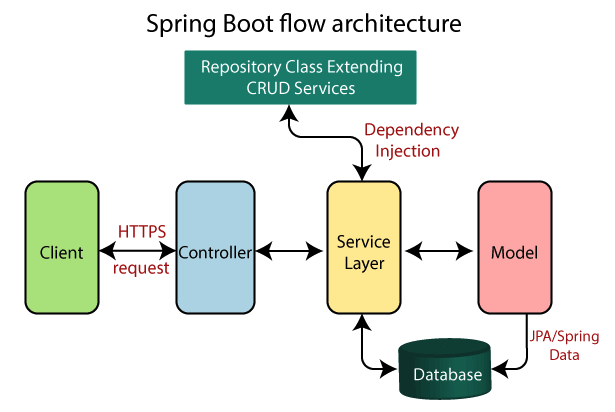
Controller layer
Service layer
Repository layer
3. Microservice Ready
Companies rely on Spring Boot for cloud-native microservices. Learning it opens huge career opportunities.
4. Massive Ecosystem
Easily integrate:
Spring Security
Spring Data JPA
Spring Cloud
Kafka
RabbitMQ
5. Ideal for REST APIs
Most modern applications (FinTech, e-commerce, mobile apps) need APIs — Spring Boot is perfect for that.
How Spring Boot Works (In Simple Terms)
When a Spring Boot application starts:
It scans your project for classes with Spring annotations.
It auto-configures beans based on available dependencies.
It starts an embedded web server.
It executes the main application logic.
The magic comes from the @SpringBootApplication annotation, which combines:
@Configuration@EnableAutoConfiguration@ComponentScan
Example:
@SpringBootApplication
public class Application {
    public static void main(String[] args) {
        SpringApplication.run(Application.class, args);
    }
}
Spring Boot Starter Dependencies
Spring Boot provides “starter packs” that include everything you need for common tasks.
Popular Starter Dependencies
PurposeDependencyBuild REST APIs spring-boot-starter-webConnect to a database spring-boot-starter-data-jpaAdd security spring-boot-starter-securityWrite unit tests spring-boot-starter-test
Example from pom.xml:
<dependency>
    <groupId>org.springframework.boot</groupId>
    <artifactId>spring-boot-starter-web</artifactId>
</dependency>
Step-by-Step: How to Create Your First Spring Boot Project
This is the most important part for beginners.
Step 1: Create a New Spring Boot Project
Go to Spring Initializr (https://start.spring.io) and select:
Project: MavenLanguage: JavaSpring Boot Version: LatestDependencies:Spring WebSpring Data JPAH2 DatabaseLombok (optional but recommended)
Download the project and open it in IntelliJ or Eclipse.
Step 2: Create Your First REST Controller
Create a class inside controller package:
@RestController@RequestMapping(”/api”)
public class HelloController {
@GetMapping(”/hello”)
public String sayHello() {
return “Welcome to Spring Boot!”;
}
}
Run the app and open:
http://localhost:8080/api/helloStep 3: Create an Entity and Repository
Entity:
@Entity@Data
public class User {
@Id
@GeneratedValue(strategy = GenerationType.IDENTITY)
private Long id;
private String name;
private String email;
}
Repository:
public interface UserRepository extends JpaRepository<User, Long> {}Step 4: Create a Service Layer (Best Practice)
@Service@RequiredArgsConstructor
public class UserService {
private final UserRepository userRepository;
public User createUser(User user) {
return userRepository.save(user);
}
}
Step 5: Create REST API Endpoints
@RestController@RequiredArgsConstructor
@RequestMapping(”/api/users”)
public class UserController {
private final UserService userService;
@PostMapping
public User addUser(@RequestBody User user) {
return userService.createUser(user);
}
}
Test using Postman.
Databases in Spring Boot: Beginners Guide
Spring Boot supports:
MySQLPostgreSQLMongoDBOracleH2 (in-memory, great for beginners)
Example MySQL configuration in application.properties:
spring.datasource.url=jdbc:mysql://localhost:3306/mydb
spring.datasource.username=root
spring.datasource.password=password
spring.jpa.hibernate.ddl-auto=update
Introduction to Spring Security (Beginner Level)
Spring Security adds:
AuthenticationAuthorizationPassword encodingRole-based access
Example:
@Bean
public SecurityFilterChain filterChain(HttpSecurity http) throws Exception {
    http.csrf().disable()
        .authorizeHttpRequests()
        .anyRequest().authenticated()
        .and()
        .httpBasic();

    return http.build();
}
Spring Boot Actuator: Monitoring & Health Checks
Actuator gives real-time production insights.
Enable it:
<dependency>
    <groupId>org.springframework.boot</groupId>
    <artifactId>spring-boot-starter-actuator</artifactId>
</dependency>
Check health:
/actuator/healthDeploying a Spring Boot Application
Popular deployment methods:
DockerAWS EC2Heroku (free alternatives limited)Hostinger VPSKubernetesCloud Run
Just build a JAR:
mvn clean packageRun:
java -jar app.jarBest Practices for Beginners
Use services instead of writing logic in controllers.Keep code modular (Controller → Service → Repository)Use DTOs for API responses.Handle exceptions with @ControllerAdviceUse environment variables for secrets.Validate inputs using @Valid
Conclusion: Why Spring Boot Is the Best Starting Point for Java Developers
Spring Boot provides everything you need to build modern, secure, scalable applications - whether you’re creating:
REST APIsMicroservicesE-commerce platformsFinTech appsEnterprise applications
Its simplicity, flexibility, and rich ecosystem make it the perfect choice for beginners and experts alike.
If you’re starting your backend journey in 2025, Spring Boot is absolutely the framework you should learn first.